










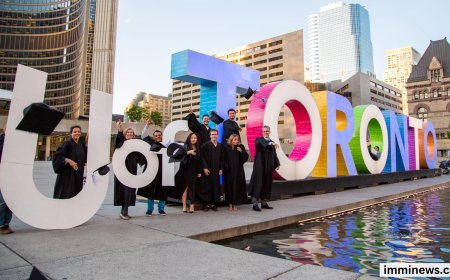












































From Student to Canadian Permanent Resident: Master’s Degree PR Hack
Discover how a Canadian master’s degree boosts CRS scores, PGWP work experience and Express Entry success to get Canada PR faster through IRCC pathways Today.

Canada immigration continues to be one of the most sought-after opportunities for international students and skilled workers, and many are discovering that a Canadian master’s degree can be a direct and strategic pathway toward permanent residence. In a competitive environment where Express Entry cut-off scores fluctuate and IRCC policies evolve, earning a graduate credential in Canada does far more than build academic knowledge. It can increase your CRS score, open work opportunities, and significantly improve your chances of being invited to apply for permanent residence. For many applicants, a master’s degree is not simply education—it becomes the bridge to long-term settlement in Canada.
Higher CRS scores through Express Entry
One of the most important benefits of completing a master’s degree in Canada is the substantial boost it provides to your Comprehensive Ranking System (CRS) score. A Canadian master’s increases both your core human capital points and additional points awarded specifically for Canadian education. A single applicant may earn up to 135 education points plus 30 extra CRS points simply for holding a Canadian graduate credential. To understand how CRS points are calculated and how education influences your profile, you can review the official explanation in the Express Entry Comprehensive Ranking System (CRS) guide.
Eligibility for a Post-Graduation Work Permit (PGWP)
Graduates of most eligible Canadian master’s programs can apply for a Post-Graduation Work Permit valid for up to three years. This permit allows open employment, meaning graduates are free to work for almost any employer in Canada. The Canadian work experience gained during this time is highly valuable because it is directly rewarded in CRS scoring and is recognized by many IRCC immigration pathways. It also makes applicants far more competitive in the local job market, building both income and long-term career stability.
Stronger pathway to the Canadian Experience Class (CEC)
Once a graduate gains at least one year of skilled Canadian work experience, they may become eligible under the Canadian Experience Class. This pathway is one of the most popular streams within Express Entry because it rewards individuals who have already integrated into Canada’s labour market. For many international students, the journey becomes straightforward: study, graduate, work on a PGWP, enter CEC, and receive an Invitation to Apply when the CRS score becomes competitive.
Real-life impact on permanent residence outcomes
A real-life scenario demonstrates this impact clearly. Consider Anna, a 24-year-old project manager from India. Before studying in Canada, her CRS score was 416, which was far below the usual cut-off scores. After completing a master’s program in Canada and gaining one year of Canadian work experience, her CRS increased to 539. That change allowed her to qualify for most CEC draws. A detailed discussion of examples like this can be read here.


Relevance in the current Express Entry landscape
Recent Express Entry results have surprised many applicants with higher-than-expected CRS cut-offs. This makes Canadian education even more valuable. To understand how draw scores are evolving, you can read the article. This helps illustrate why a Canadian master’s degree often becomes the deciding factor between receiving an Invitation to Apply or remaining in the pool.
Beyond immigration: Academic and career advantages
A Canadian master’s degree offers more than immigration points. Canadian universities are globally recognized for high academic standards, research facilities, and strong industry connections. Graduates benefit from professional networking, co-op programs, internships, and access to high-growth job markets. In some academic master’s programs, international students may even receive funding packages or assistantships that can significantly reduce tuition costs or even exceed them. This makes the degree not only an immigration strategy but also a valuable academic investment.
A Canadian master’s degree can significantly increase your chances of obtaining permanent residence through Canada's immigration pathways. It provides a major CRS boost, opens eligibility to the Post-Graduation Work Permit, supports entry into the Canadian Experience Class, and strengthens your competitiveness in Express Entry. For many applicants, it becomes the turning point that converts a dream of Canada PR into reality.
If you are planning your study-to-PR strategy or want expert guidance tailored to your profile, you can schedule a consultation. You can also explore immigration news, resources, and updates by visiting the A2Zimmi.
What's Your Reaction?
 Like
0
Like
0
 Dislike
0
Dislike
0
 Love
0
Love
0
 Funny
0
Funny
0
 Angry
0
Angry
0
 Sad
0
Sad
0
 Wow
0
Wow
0