










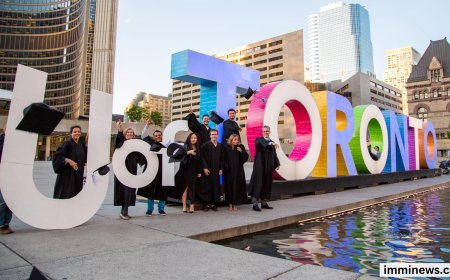












































How to Get Canadian PR With a Two-Year College Degree
Learn how a two-year college diploma can lead to Canadian PR through PGWP, CEC, Express Entry, and PNP pathways. Plan your Canada immigration smartly.

Getting Canadian PR with a two-year college degree is no longer a distant dream—it’s a strategic pathway many international students are successfully using today. With the right planning, a short academic program can open doors to long-term settlement in Canada through work permits and permanent residence streams.
Canada’s immigration system continues to favor candidates with Canadian education and work experience, making two-year college programs an affordable and efficient route for aspiring immigrants. In this guide, we’ll break down how, why, and when a two-year diploma can work in your favor—and how to maximize your chances under IRCC-approved immigration pathways.
Benefits of Getting Canadian PR With a Two-Year College Degree
Choosing a two-year college program is not just about education—it’s a calculated immigration move. Below are the key benefits that make this pathway so powerful for international students aiming for Canadian immigration success.
1. Eligibility for a Three-Year Post-Graduation Work Permit (PGWP)
One of the biggest advantages of completing a two-year program at a Canadian college is eligibility for a three-year Post-Graduation Work Permit (PGWP). This extended open work permit allows graduates to gain valuable Canadian work experience, which is critical for permanent residency. Unlike shorter programs that only grant limited work authorization, a three-year PGWP provides enough time to:
-
Secure skilled employment

-
Accumulate PR-eligible work experience
-
Improve language scores
-
Explore multiple immigration pathways


According to official PGWP eligibility rules outlined by CanadaVisa, graduates from eligible programs at designated learning institutions (DLIs) can legally work for any employer across Canada after completing their studies. You can review detailed PGWP rules and eligibility criteria through this authoritative guide on the Post-Graduation Work Permit Program. This extended work authorization significantly increases your chances of qualifying under federal and provincial PR programs.
2. Direct Pathway to the Canadian Experience Class (CEC)
The Canadian Experience Class (CEC) is one of the most reliable and popular PR routes for international graduates, and a two-year college diploma fits perfectly into this pathway.
To qualify for CEC, candidates must obtain:
-
At least one year (1,560 hours) of paid skilled work experience
-
Work experience in TEER 0, 1, 2, or 3 occupations
-
Experience gained while authorized to work in Canada (such as on a PGWP)
With a three-year PGWP, graduates have ample time to secure a qualifying role and meet these requirements comfortably. This makes CEC the “classic” PGWP-to-PR bridge for college graduates.
For a deeper understanding of how CEC works under Express Entry, refer to this trusted breakdown of the Canadian Experience Class pathway. Importantly, work completed while studying (including co-op terms) does not count toward CEC, which is why post-graduation planning is essential.
3. Improved CRS Score Under Express Entry
Canada’s Express Entry system ranks candidates using the Comprehensive Ranking System (CRS). A two-year Canadian credential may not seem impressive at first glance—but when combined with other factors, it can significantly boost your score.


Here’s how a two-year college diploma strengthens your CRS profile:
-
Canadian education earns bonus CRS points
-
Canadian work experience adds substantial value
-
Language proficiency improvements multiply scoring potential
-
Employer connections can support PNP or LMIA-backed roles
Graduates who strategically plan their studies and employment often outperform overseas applicants with higher education but no Canadian exposure.
Given ongoing changes to immigration selection criteria, it’s also worth monitoring future trends. This article on whether Canada PR in 2026 will be easier or harder provides timely insights into how Express Entry and IRCC policies are evolving and what it means for international graduates.
4. Access to Category-Based Express Entry Draws
Another major benefit of the two-year college route is eligibility for category-based Express Entry draws, which often have lower CRS cut-offs than general draws. IRCC currently prioritizes candidates with experience or skills in:
-
Healthcare and social services
-
STEM occupations
-
Trades
-
Agriculture and agri-food
-
Education
-
French-language proficiency
Many two-year college programs are designed around in-demand occupations, particularly in healthcare, technology, and skilled trades. If your work experience aligns with one of these categories, you may receive an Invitation to Apply (ITA) even with a modest CRS score. This targeted approach significantly improves PR chances for college graduates who plan their field of study wisely.
5. Strong Provincial Nominee Program (PNP) Opportunities
If Express Entry scores aren’t competitive, Provincial Nominee Programs (PNPs) offer a powerful alternative—and two-year college graduates are often prime candidates.
Many provinces actively nominate international graduates who:
-
Studied locally
-
Secured employment in the province
-
Meet language and settlement requirements
A provincial nomination adds 600 CRS points, virtually guaranteeing an ITA under Express Entry.
Popular graduate-focused PNPs include:
-
Ontario Employer Job Offer (International Student Stream)
-
Manitoba International Education Stream
-
Alberta Graduate Entrepreneur Stream
Because PNPs are province-specific and frequently updated, choosing where you study can be just as important as what you study. Strategic planning here can drastically shorten your PR timeline.
A two-year college degree can absolutely lead to Canadian PR—but success depends on smart planning, informed decisions, and timely action. From securing a three-year PGWP to building skilled Canadian work experience, improving CRS scores, and leveraging Express Entry or PNP pathways, this route offers flexibility and real opportunity.
Canada’s immigration system rewards candidates who invest in Canadian education and contribute to the workforce—and a two-year diploma is often the fastest, most cost-effective way to do just that. If you’re serious about turning your study plan into a permanent future in Canada, expert guidance can make all the difference.
Visit A2Zimmi’s official website or schedule a personalized consultation to get professional advice tailored to your profile and goals. Your Canadian PR journey doesn’t start after graduation—it starts with the right plan today.
What's Your Reaction?
 Like
0
Like
0
 Dislike
0
Dislike
0
 Love
0
Love
0
 Funny
0
Funny
0
 Angry
0
Angry
0
 Sad
0
Sad
0
 Wow
0
Wow
0