























































IRCC Extends Gaza Special Immigration Measures to 2028: Who Can Still Enter Canada?
Canada extends IRCC Gaza special immigration policy until 2028, allowing eligible TRV holders entry as visitors with exemptions under Canada immigration rules.
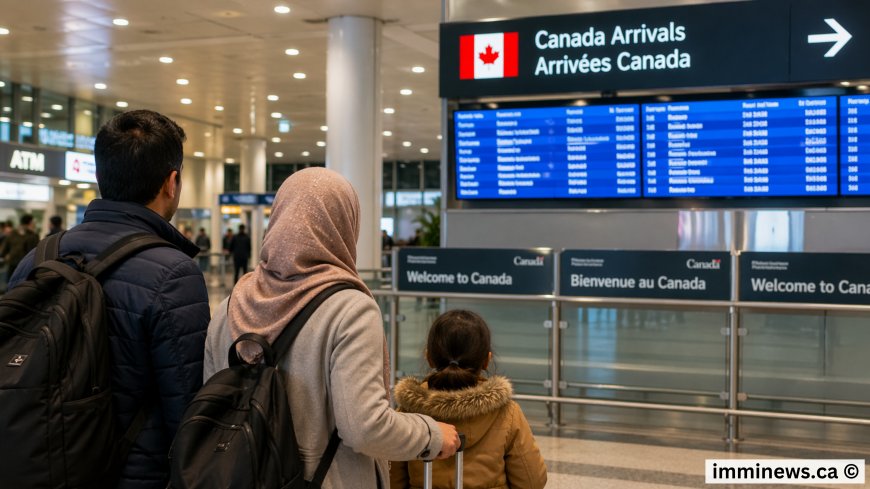
Canada has quietly but significantly extended a special immigration public policy designed to support foreign nationals stranded in Gaza, offering them continued access to temporary entry as visitors under relaxed border requirements. The policy extension, announced by the government and administered by Immigration, Refugees and Citizenship Canada (IRCC), will remain in effect from April 24, 2026, until March 31, 2028.
While the measure is humanitarian in nature, it also reflects Canada’s evolving approach to emergency migration pathways, particularly in conflict-affected regions. The extension provides additional time for eligible individuals to travel to Canada under previously approved temporary resident visas, but it also maintains strict limitations on eligibility and entry conditions.
What Has Been Announced
The newly extended public policy allows foreign nationals who were previously approved under Canada’s Gaza facilitation measures to enter the country as visitors, even if they do not meet standard admissibility expectations related to departure intent and financial sufficiency at the border.
Key highlights of the extension include:


- Validity period: April 24, 2026 – March 31, 2028
- Applies only to individuals who already hold a TRV issued under earlier Gaza special measures
- Entry exemptions for specific visitor requirements remain in place
- Policy can still be revoked at any time by the government
Importantly, this extension does not reopen applications or expand eligibility to new applicants.
Key Changes Explained
The policy is built on earlier humanitarian measures introduced in 2023 and refined in 2024. It consists of three components, though only one remains active.
1. Temporary Resident Visa Pathway (Closed)
This component previously allowed Palestinian nationals in Gaza to apply for a facilitated visa process if they had a Canadian citizen or permanent resident “anchor” providing settlement support. This pathway is now closed and capped.
2. Family-Based Extension (Expired)
Immediate family members of approved applicants were also allowed to join under the same facilitation rules. This stream is no longer active.
3. Entry Exemptions (Now Extended)
The current extension focuses solely on entry facilitation. Eligible individuals:
- Do not need to prove they will leave Canada after their visit
- Are exempt from demonstrating sufficient financial resources at entry
- Must still meet all other standard admissibility and security requirements
This means the policy does not eliminate screening but reduces barriers for already-approved individuals in exceptional humanitarian circumstances.
Why This Policy Is Being Extended
The extension reflects both humanitarian and administrative considerations.


Canada continues to face complex global displacement pressures, and Gaza remains a region of severe instability. By extending the entry window, the government is ensuring that individuals already approved under earlier processing rounds are not excluded simply due to delays in travel logistics, security constraints, or border access issues.
At the same time, Canada maintains control over intake by:
- Keeping the application cap unchanged
- Limiting eligibility to previously approved individuals
- Retaining full security and admissibility screening outside the waived criteria
This balance reflects Canada’s broader immigration strategy of combining humanitarian flexibility with controlled intake management under Immigration, Refugees and Citizenship Canada.
Impact Analysis
Students and Temporary Residents
Although not directly a student visa program, the policy intersects with broader Canada immigration pathways. Some individuals entering under this measure may later explore study permit Canada or other temporary status options, depending on eligibility.
However, no automatic transition pathways exist, and each case is assessed independently.
Work Permit Applicants
There is no direct work permit provision under this policy. Individuals entering Canada under visitor status cannot legally work unless they qualify under separate work permit Canada programs.
Permanent Residence (PR) Candidates
The policy does not grant direct access to Canada PR pathways such as Express Entry or provincial programs. However, it may indirectly affect future eligibility if individuals later transition into recognized immigration streams.
Winners and Losers
Potential Beneficiaries
- Foreign nationals already approved under earlier Gaza TRV measures
- Families separated due to conflict who were unable to travel within earlier deadlines
- Canadian citizens and permanent residents acting as anchors supporting reunification efforts
Those Facing Limitations
- New applicants seeking similar humanitarian entry (not eligible under this extension)
- Individuals outside the previously approved pool
- Those expecting long-term immigration or PR outcomes from this policy
Expert Insight
From an immigration policy perspective, this extension is not an expansion of Canada’s humanitarian intake, but a continuity measure.
The critical shift is time-based, not eligibility-based. Canada is essentially acknowledging that geopolitical instability and logistical barriers have delayed movement for approved individuals and is preventing their applications from expiring due to external circumstances.
From an IRCC operational standpoint, this approach also reduces pressure on reprocessing or reopening humanitarian streams, which are already capped and administratively complex.
Strategically, this signals three broader trends in Canada immigration policy:
- Preference for capped, controlled humanitarian programs
- Emphasis on pre-screened applicant cohorts rather than new intake surges
- Increasing reliance on temporary status solutions rather than immediate PR pathways
Strategic Advice for Applicants
For individuals or families indirectly affected by similar policies or seeking Canada immigration options, the following strategies are important:
- Do not rely on humanitarian extensions for long-term immigration planning
These policies are temporary and highly restricted. - Strengthen eligibility for mainstream pathways
Focus on Express Entry, provincial nominee programs, or study-to-PR routes. - Maintain valid documentation and status compliance
Overstaying or misinterpreting visitor status can affect future admissibility. - Explore legal immigration pathways early
Temporary humanitarian access does not guarantee future PR eligibility. - Monitor IRCC updates closely
Policies can change or be revoked without extended notice. - Seek professional assessment if eligible under past programs
Prior approvals under special measures may still require careful compliance planning.
Canada’s extension of the Gaza special public policy reflects a continued humanitarian commitment, but within a tightly controlled immigration framework. By extending entry exemptions until 2028, the government is ensuring continuity for previously approved individuals while maintaining strict limits on new intake and long-term immigration impact.
For the broader Canada immigration system, this development reinforces a clear direction: humanitarian flexibility exists, but within structured, time-bound, and heavily regulated pathways. Applicants must therefore continue to prioritize stable, long-term immigration routes such as Express Entry, study permits, and provincial programs rather than relying on temporary special measures.
What's Your Reaction?
 Like
0
Like
0
 Dislike
0
Dislike
0
 Love
0
Love
0
 Funny
0
Funny
0
 Angry
0
Angry
0
 Sad
0
Sad
0
 Wow
0
Wow
0