




















































IRCC Processing Times Update 2026: Work Permits, Study & Visitor Visas Show Major Changes
Latest IRCC processing times update shows changes in Canada immigration for work permits, study permits, visitor visas and Super Visa applications. latest updates
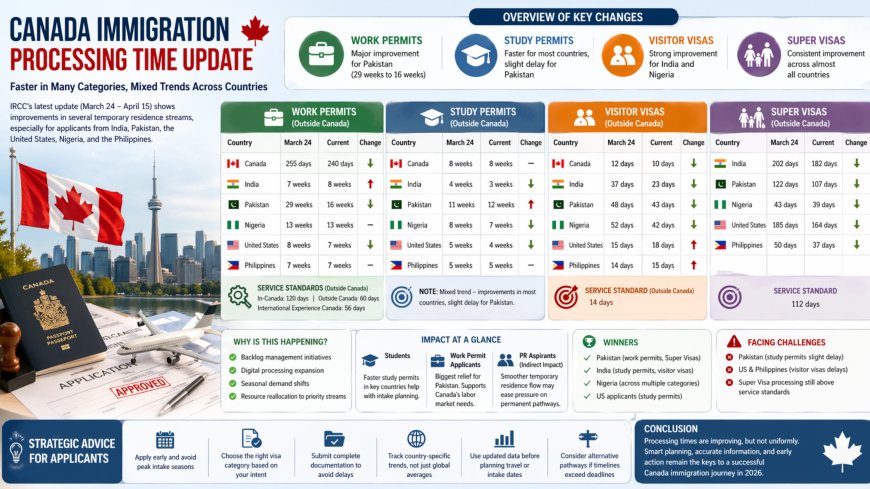
Recent updates from Immigration, Refugees and Citizenship Canada reveal a notable shift in temporary residence processing times, with several categories showing improvements for applicants from India, Pakistan, the United States, Nigeria, and the Philippines. While the overall trend indicates faster decisions in many cases, the data also highlights inconsistencies across visa types and source countries.
For Canada immigration applicants, these changes are more than statistical updates—they directly impact planning for study, work, and travel. Faster processing in some categories suggests improved operational efficiency, but uneven progress signals continued pressure on IRCC’s system.
What Has Been Announced
IRCC’s latest processing time update, comparing data from March 24 to April 15, shows movement across four key temporary residence streams:
- Work permits
- Study permits
- Visitor visas
- Super visas
The most significant developments include:


- Strong improvement in work permit processing for applicants from Pakistan
- Reduced wait times for Super Visas across almost all countries
- Faster visitor visa processing for India and Nigeria
- Slight mixed movement in study permits, with both improvements and minor delays
Key Changes Explained
Work Permits
Work permit processing shows the most dramatic shift, especially for applicants from Pakistan, where processing times dropped significantly from 29 weeks to 16 weeks.
| Country | March 24 | Current | Change |
| Canada | 255 days | 240 days | Improved |
| India | 7 weeks | 8 weeks | Slight delay |
| Pakistan | 29 weeks | 16 weeks | Major improvement |
| Nigeria | 13 weeks | 13 weeks | Stable |
| United States | 8 weeks | 7 weeks | Improved |
| Philippines | 7 weeks | 7 weeks | Stable |
Service standards remain:
- In-Canada applications: 120 days
- Outside Canada: 60 days
- International Experience Canada: 56 days
Study Permits
Study permit processing shows a mixed pattern, with slight improvements for most countries but a small delay for Pakistan.
| Country | March 24 | Current | Change |
| Canada | 8 weeks | 8 weeks | No change |
| India | 4 weeks | 3 weeks | Improved |
| Pakistan | 11 weeks | 12 weeks | Slight delay |
| Nigeria | 8 weeks | 7 weeks | Improved |
| United States | 5 weeks | 4 weeks | Improved |
| Philippines | 5 weeks | 5 weeks | Stable |
Visitor Visas
Visitor visa processing times show broad improvement, particularly for India and Nigeria.
| Country | March 24 | Current | Change |
| Canada | 12 days | 10 days | Improved |
| India | 37 days | 23 days | Strong improvement |
| Pakistan | 48 days | 43 days | Improved |
| Nigeria | 52 days | 42 days | Strong improvement |
| United States | 15 days | 18 days | Slight delay |
| Philippines | 14 days | 15 days | Slight delay |
Service standard for outside Canada visitor visas remains 14 days, meaning some countries are still above target.
Super Visas
Super visa processing continues its downward trend, showing consistent improvement across all countries.
| Country | March 24 | Current | Change |
| India | 202 days | 182 days | Significant improvement |
| Pakistan | 122 days | 107 days | Improved |
| Nigeria | 43 days | 39 days | Improved |
| United States | 185 days | 164 days | Improved |
| Philippines | 50 days | 37 days | Strong improvement |
Service standard: 112 days
Why This Change Is Happening


Several operational and policy-level factors may be contributing to these improvements:
- Backlog Management Initiatives – IRCC has been actively reducing application inventories across high-volume streams.
- Digital Processing Expansion – Increased automation and digital intake systems are improving efficiency.
- Seasonal Demand Shifts – Temporary dips in application volume in certain categories may be accelerating processing.
- Resource Reallocation – IRCC may be prioritizing work permit and family reunification streams such as Super Visas.
Impact Analysis
Students
Study permit applicants benefit from faster decisions in key countries like India, Nigeria, and the US. However, delays in Pakistan may create uncertainty for applicants targeting Fall or Winter intake timelines.
Work Permit Applicants
The most significant relief is seen here, especially for Pakistani applicants. Faster approvals may support Canada’s labor market needs, particularly in sectors facing shortages.
PR Aspirants (Indirect Impact)
While this update does not directly affect Express Entry or Canada PR, faster temporary residence processing may ease pressure on inland transitions and improve overall immigration system flow.
Winners and Losers
Winners
- Applicants from Pakistan (work permits, Super Visas improvement)
- Indian students (study permits and visitor visas faster)
- Nigerian applicants (improved across multiple categories)
- US applicants (study permit improvements)
Facing Challenges
- Pakistani study permit applicants (slight delay)
- US visitor visa applicants (minor increase in processing time)
- Philippines visitor visa applicants (slight increase)
- Applicants still exceeding service standards in Super Visa category
Expert Insight
From an immigration strategy perspective, these changes reflect a system in transition rather than a stable long-term improvement.
While improvements in work permits and Super Visas are significant, the inconsistency across categories suggests IRCC is prioritizing specific immigration streams rather than applying uniform efficiency gains.
For applicants, this means:
- Faster processing is available, but not guaranteed across all visa types
- Country of application still heavily influences outcomes
- Temporary residence strategies must be carefully timed
Importantly, the divergence between processing times and service standards indicates that while IRCC is improving performance, it is still struggling to meet its own benchmarks in several categories.
Strategic Advice for Applicants
- Apply early and avoid peak intake seasons
- Choose the correct visa category based on intent (study, work, or visit)
- Ensure complete documentation to avoid delays in already fluctuating timelines
- Track country-specific trends rather than relying on global averages
- Use updated processing data before planning travel or intake dates
- Consider alternative pathways if timelines exceed program deadlines
The latest IRCC processing time update presents a cautiously positive outlook for Canada immigration applicants. While work permits and Super Visas show strong improvements, inconsistencies in study and visitor visas highlight that Canada’s immigration system is still balancing demand and capacity.
For applicants, the key takeaway is clear: processing times are improving, but strategic planning remains essential. Understanding country-specific trends and category-specific differences will be critical for making informed immigration decisions in 2026.
What's Your Reaction?
 Like
0
Like
0
 Dislike
0
Dislike
0
 Love
0
Love
0
 Funny
0
Funny
0
 Angry
0
Angry
0
 Sad
0
Sad
0
 Wow
0
Wow
0