























































Canada Tightens Immigration in 2026 — Who Will Still Get PR? Full Breakdown
Canada’s 2026 immigration reset reduces temporary residents, keeps PR near 380,000, and prioritizes skilled workers, French speakers, and Express Entry targets.
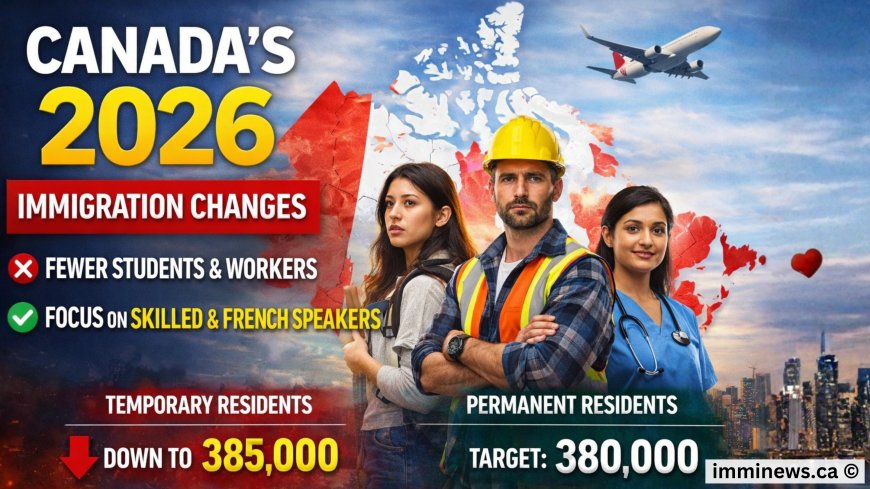
Canada has introduced a significant shift in its immigration strategy for 2026–2027, signaling a move toward tighter control over temporary residents while maintaining a strong focus on economic immigration.
The announcement, led by Lena Metlege Diab and implemented through Immigration, Refugees and Citizenship Canada, reflects the government’s effort to balance economic growth with growing pressures on housing, infrastructure, and public services.
This is not just a routine update. It represents a structural reset of how Canada manages immigration.
A Major Reduction in Temporary Residents
One of the most notable changes is the sharp reduction in the number of temporary residents, including international students and foreign workers.
Canada plans to reduce new temporary resident arrivals from approximately 673,000 in 2025 to 385,000 in 2026. In addition, the government aims to bring the total share of temporary residents in Canada to below 5% of the population by 2026–2027.


This move is clearly intended to:
-
Ease pressure on housing availability
-
Reduce strain on healthcare and infrastructure
-
Improve system efficiency and processing timelines
Permanent Resident Targets Remain Stable but More Selective
While temporary entries are being reduced, permanent resident admissions will remain relatively stable.
-
Target for 2026: Approximately 380,000 new permanent residents
However, the composition of these admissions is changing. Canada plans to increase the proportion of economic immigrants from 59% to 64% by 2027.
This means:
-
Greater emphasis on skilled workers
-
Increased alignment with labour market needs
-
More targeted selection through programs like Express Entry
At the same time, Canada intends to keep overall permanent resident admissions at less than 1% of the population annually beyond 2027, ensuring long-term sustainability.


Continued Focus on Skilled Talent and Priority Sectors
Despite the reduction in overall numbers, Canada is not closing its doors. Instead, it is becoming more selective. Recent updates to the Express Entry system highlight priority categories such as:
-
Healthcare professionals
-
Skilled trades workers
-
Candidates with expertise in emerging technologies
-
French-speaking applicants
This indicates a clear policy direction:
Quality and relevance of skills will matter more than ever before.
Francophone Immigration Gains Importance
Canada is also strengthening its commitment to French-speaking immigration outside Quebec.
-
2026 target: 9% of permanent resident admissions
-
Long-term goal: 12% by 2029
Candidates with strong French language proficiency are expected to benefit significantly under category-based selection.
Reforms to Refugee and Asylum Systems
The government has also indicated plans to improve the integrity and efficiency of its asylum system.
Key focus areas include:
-
Faster processing of asylum claims
-
Strengthened border management
-
Ensuring timely protection for genuine refugees
The goal is to maintain humanitarian commitments while improving public confidence in the system.
Why This Policy Shift Is Happening
This immigration reset is driven by multiple factors:
-
Rapid population growth in recent years
-
Housing shortages in major cities
-
Pressure on healthcare and social services
-
The need for a more controlled and predictable system
Canada continues to rely heavily on immigration for labour force growth, but the approach is now shifting from volume-based intake to targeted selection.
What This Means for Applicants
This new direction has clear implications for future applicants:
1. Temporary Pathways Will Become More Competitive
Study permits and work permits are expected to face:
-
Higher scrutiny
-
Increased refusal rates
-
Stricter eligibility requirements
2. Economic Immigration Will Be More Strategic
Applicants with:
-
In-demand skills
-
Canadian work experience
-
Strong language ability (especially French)
will have a significant advantage.
3. Generic Profiles Will Struggle
Candidates without a clear economic value or alignment with priority sectors may find it increasingly difficult to succeed.
Expert Insight: A Shift from Quantity to Strategy
From a professional immigration perspective, this policy change marks a clear transition:
Canada is moving from “more applicants” to “right applicants.”
For prospective immigrants, this means:
-
Planning is now more important than ever
-
Choosing the right pathway is critical
-
Strengthening profiles (skills, language, experience) is essential
For employers, it signals:
-
Continued access to talent, but through more structured and targeted channels
Canada’s 2026–2027 immigration plan reflects a more balanced and controlled approach to migration. While the number of temporary residents is being reduced, opportunities remain strong for individuals who align with Canada’s economic and demographic priorities.
The message is clear:
Canada is still open—but it is becoming more selective.
What's Your Reaction?
 Like
0
Like
0
 Dislike
0
Dislike
0
 Love
0
Love
0
 Funny
0
Funny
0
 Angry
0
Angry
0
 Sad
0
Sad
0
 Wow
0
Wow
0