























































Carney’s New Immigration Plan Shakes Up Canada
Canada redefines immigration under Mark Carney — focusing on skilled talent, regional needs, and public confidence for a sustainable future.
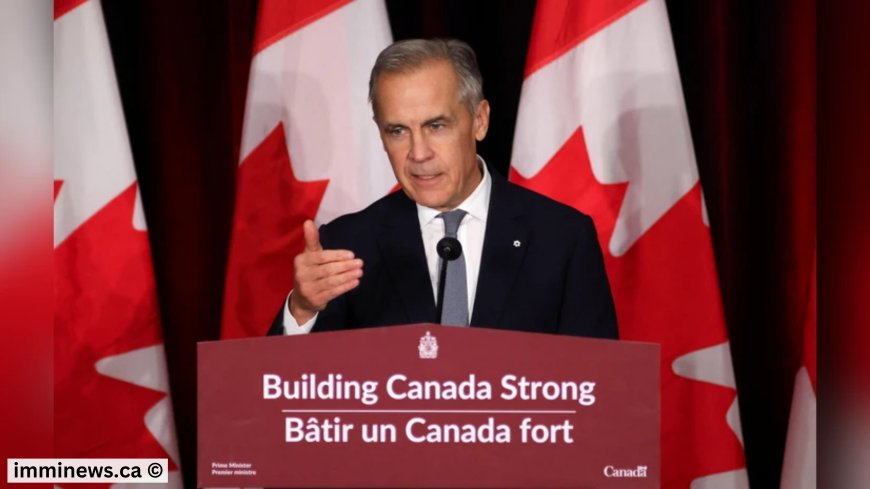
Canada is once again at a crossroads in its immigration policy. With Prime Minister Mark Carney announcing a recalibration of immigration targets, the federal government is signaling a significant policy shift — one designed to balance economic demands with growing public concerns. The decision comes amid changing attitudes toward newcomers, a slowing economy, and rising housing and employment pressures.
After years of record-breaking immigration levels that fueled post-pandemic recovery, the government is now focusing on creating a more sustainable, skill-driven, and economically aligned immigration system. Carney’s new strategy emphasizes quality over quantity — prioritizing skilled talent, regional balance, and integration capacity.
This policy shift is not merely a response to economic challenges; it represents a strategic evolution in how Canada views immigration’s role in its national growth story.
The Context: Why the Shift Matters
For decades, Canada’s immigration system has been a cornerstone of its demographic and economic strategy. Following the pandemic, immigration targets were ramped up to meet severe labor shortages — hitting a record 500,000 permanent residents in 2023. However, the rapid increase sparked concerns about housing affordability, healthcare strain, and infrastructure readiness.
Public sentiment began to shift. According to government surveys, more Canadians than ever before said that immigration levels were “too high” — the first such majority since Immigration, Refugees and Citizenship Canada (IRCC) began tracking opinions in 1996.


In response, the federal government announced a reduction in immigration targets — from 500,000 to 395,000 permanent residents in 2024, with gradual decreases in the years ahead. A similar cap was placed on international student permits, reduced by 10%.
The message was clear: Canada’s immigration strategy would no longer focus solely on volume but on alignment with capacity and need.
The Benefits of This Policy Shift
Carney’s recalibrated immigration policy may appear restrictive on the surface, but in reality, it carries long-term benefits for the Canadian economy, society, and global competitiveness. Below are the key benefits of this shift:
1. Strengthening Labour Market Alignment
Under the new approach, Canada aims to bridge the gap between immigrant qualifications and labour market demand. A recent CBC report highlighted how many newcomers face underemployment, with a significant number working in jobs unrelated to their education or training.
By refining selection criteria and focusing on precision-based immigration — emphasizing in-demand sectors such as AI, cybersecurity, semiconductors, and healthcare — the government hopes to ensure that immigrants contribute directly to Canada’s economic growth.
This approach resonates with experts like Anne Patterson from the Information and Communications Technology Council, who called for a move away from “volume-based immigration” toward “strategic talent pathways.”
Through initiatives like the Manitoba Provincial Nominee Program (MPNP), provinces are already prioritizing candidates who fill local skill gaps — a model that aligns with Carney’s national vision. (Learn more about Manitoba’s latest initiative here).
2. Relieving Pressure on Housing and Public Services
One of the strongest drivers behind this policy change is the overwhelming pressure immigration placed on housing and infrastructure. Canada’s housing market has faced unprecedented demand, driving up prices and rents nationwide.
By moderating immigration levels, the federal government aims to provide provinces and cities time to expand housing supply, healthcare infrastructure, and transportation networks.
Experts like Usha George from Toronto Metropolitan University point out that the “rapid influx strained public services beyond capacity.” The recalibration allows Canada to rebuild these systems sustainably — ensuring that future newcomers can integrate more effectively into well-supported communities.
This measured approach aligns immigration growth with infrastructure readiness — helping Canada maintain its reputation as a country that welcomes immigrants successfully, rather than merely admitting them in large numbers.
3. Enhancing Public Confidence in the Immigration System
Immigration has long been a source of national pride for Canada, but public trust in the system has recently declined. Rising unemployment (7.1% overall and 11.1% for recent immigrants) and visible infrastructure strain have created skepticism about the country’s capacity to handle current immigration volumes.


Mark Carney’s policy shift is, in part, designed to rebuild this confidence. By making the system more transparent, targeted, and accountable, the government aims to reassure Canadians that immigration remains beneficial — not burdensome.
According to public opinion research by IRCC, citizens are more supportive of immigration when they see clear economic and social benefits, such as addressing skill shortages and driving innovation.
This policy realignment thus ensures that immigration remains politically and socially sustainable — preserving the consensus that has long defined Canada’s multicultural success story.
4. Promoting Regional and Economic Diversity
Another benefit of this shift is the renewed emphasis on regional immigration programs, such as the Provincial Nominee Programs (PNPs). Provinces like Manitoba, Prince Edward Island, and Saskatchewan are being empowered to tailor immigration to their local labour needs.
Carney’s strategy strengthens these initiatives, ensuring that immigration not only supports major urban centers but also revitalizes smaller communities and rural economies.
This regionalized approach has shown tangible success — for instance, Prince Edward Island’s recent PNP draw invited international graduates to help meet local workforce demands. You can read about this initiative here.
By redistributing immigration across Canada, the government reduces strain on large cities like Toronto and Vancouver while fueling growth in smaller regions — promoting balanced national development.
5. Strengthening Canada’s Global Competitiveness
While some fear that lowering immigration numbers could hurt economic growth, Carney’s precision-based system could make Canada more competitive globally.
By focusing on highly skilled workers, particularly in emerging industries like AI, digital infrastructure, and clean technology, the government is positioning Canada as a global hub for innovation.
Rob Goehring, CEO of AI startup Wisr, emphasized that a “strong pipeline of international talent” is vital for growth. The recalibrated system ensures that companies can access the right talent quickly, avoiding long wait times and unnecessary bureaucratic hurdles.
Moreover, with U.S. policy changes — like the $100,000 employer fee for H-1B visas — Canada has a unique opportunity to attract top global talent seeking a more stable and inclusive destination.
A Shift Toward “Smart Immigration”
Mark Carney’s policy is best understood as a move toward “smart immigration.” It’s not about reducing opportunities for newcomers — it’s about ensuring that every immigrant entering Canada has a clear path to success, both personally and professionally.
This aligns with the country’s long-term demographic needs. Canada still faces an aging population and low birth rates, but rather than simply increasing numbers, the government is optimizing outcomes — selecting individuals who bring immediate value to priority sectors and have strong settlement potential.
The IRCC continues to streamline immigration pathways, integrating more data-driven selection models and collaboration with provincial partners. This modernization ensures that immigration continues to be a driver of innovation, productivity, and diversity.
Public Sentiment and the Road Ahead
Public opinion has always played a powerful role in shaping immigration policy. For decades, Canada stood apart from other Western nations by maintaining broad public support for high immigration levels. However, as economic pressures mount, policymakers are rebalancing priorities to prevent backlash.
Experts warn that ignoring public sentiment could erode long-term support for immigration altogether. By responding proactively — moderating intake, improving job matching, and enhancing integration — Carney’s strategy seeks to preserve immigration’s legitimacy.
At the same time, this approach challenges policymakers to think beyond numbers and focus on results. The true success of immigration will be measured not by how many people Canada admits, but by how well they thrive once they arrive.
A Sustainable Future for Canadian Immigration
Carney’s immigration strategy represents a crucial turning point for Canada — one that prioritizes long-term stability, economic alignment, and public confidence. It’s a recognition that immigration, while vital, must evolve with the country’s changing social and economic realities.
By emphasizing smarter selection, regional inclusion, and infrastructure readiness, the new policy ensures that immigration continues to be a force for prosperity — not pressure.
As Canada enters this new era, collaboration between federal and provincial programs like the MPNP will be key to its success.
Want to understand how these policy changes could affect your immigration pathway? Visit A2Zimmi or book a consultation today to get expert guidance tailored to your profile.
What's Your Reaction?
 Like
0
Like
0
 Dislike
0
Dislike
0
 Love
0
Love
0
 Funny
0
Funny
0
 Angry
0
Angry
0
 Sad
0
Sad
0
 Wow
0
Wow
0